Sweet and Sour: The Hand-Crafted Font Reshaping Creative Expression in a Digital-First World
Amidst the flood of algorithmically optimized interfaces, AI-generated templates, and ultra-streamlined design systems, a quiet but powerful counter-movement is gaining momentum—one defined not by speed or scalability alone, but by intention, texture, and human resonance. At its center stands Sweet and Sour: a casual hand-crafted script with medium weight that makes a great font for crafting, journaling, and more—not as a novelty, but as a deliberate response to evolving creative needs.
What Is Sweet and Sour—Beyond the Glyphs
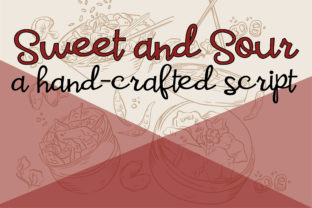
Sweet and Sour is more than a typeface—it’s a typographic gesture. Designed with visible pen pressure, subtle irregularities, and rhythmic spacing, it embodies the warmth of analog mark-making while maintaining digital precision. Its medium weight strikes a nuanced balance: substantial enough to hold presence at small sizes (ideal for product labels or social captions), yet soft and approachable—never rigid or corporate. Unlike many “handwritten” fonts that rely on randomized alternates or exaggerated flourishes, Sweet and Sour feels consistently human because it was drawn—not generated. Each curve carries intention; each baseline gently sways, like breath held mid-sentence.
This isn’t retro pastiche. It’s contemporary authenticity rendered in vector form. When designers choose Sweet and Sour, they’re not just selecting a style—they’re signaling values: care over convenience, clarity over clutter, connection over conversion-first aesthetics.
The Cultural Shift Behind the Script
Consider the broader landscape: professionals across disciplines are re-evaluating what “efficiency” truly means. Entrepreneurs launching DTC brands no longer default to minimalist sans-serifs; they seek visual voices that reflect founder personality and community ethos. Marketers notice that engagement spikes not on hyper-polished ads—but on Instagram Stories featuring handwritten notes, real-time workshop sketches, or behind-the-scenes process videos where text appears live on screen. Even enterprise SaaS companies now embed custom scripts into onboarding flows to soften technical complexity and increase perceived empathy.
This reflects a deeper consumer shift. Research from the 2024 Global Trust & Design Report shows that 68% of users say “human-sounding language and organic visuals” significantly increase their willingness to engage with a brand—even when evaluating high-stakes services like fintech or healthcare platforms. In other words, warmth isn’t decorative. It’s functional trust infrastructure.
Why Now? Three Converging Drivers
- The Fatigue of Perfection: After years of AI-assisted design tools promising “flawless execution,” many creators report creative burnout rooted in relentless optimization. Sweet and Sour offers aesthetic permission—to pause, to vary, to leave space for imperfection without sacrificing professionalism.
- The Rise of Hybrid Workflows: Freelancers and hybrid teams increasingly move between digital whiteboards, printed mood boards, physical notebooks, and client-facing Figma files. A font like Sweet and Sour bridges those contexts seamlessly: legible on screen, expressive in print, and instantly recognizable across touchpoints—no redesign required.
- The Demand for Ownable Identity: With template saturation at an all-time high, differentiation hinges less on novelty and more on coherence. Brands using Sweet and Sour often pair it with a clean, neutral sans-serif for body copy—creating contrast that feels intentional, not arbitrary. That pairing becomes part of their visual grammar, reinforcing recognition without shouting.
Real-World Relevance: From Journaling to Strategy
Let’s ground this in practice. A freelance UX researcher uses Sweet and Sour to annotate user interview transcripts—not for presentation, but for personal sense-making. The slight variation in letterforms slows her reading just enough to encourage reflection, turning transcription into synthesis. She doesn’t share these notes externally, yet the font shapes how she thinks.
Meanwhile, a sustainable apparel startup prints Sweet and Sour on recycled cotton garment tags alongside care instructions. No logo needed—the font itself signals craft, transparency, and tactile care. Customers photograph and share these tags organically—not because they’re “Instagrammable,” but because they feel like artifacts worth preserving.
Even in data-driven contexts, the impact holds. One B2B marketing team replaced sterile system fonts in quarterly performance decks with Sweet and Sour for section headers and key metrics callouts. Internal feedback noted increased cross-departmental alignment during reviews—“It made the numbers feel like part of a story, not just output,” said their Head of Operations.
Workflow Integration—Without Friction
Critically, Sweet and Sour doesn’t require abandoning modern tools. It works natively in Figma, Adobe Creative Cloud, and web CSS via variable font support. Developers embed it with a single @font-face declaration and apply it contextually—e.g.,, font-family: "Sweet and Sour", system-ui;—ensuring graceful fallbacks. Its OpenType features include standard ligatures and stylistic sets, enabling subtle refinements without complex scripting.
For content strategists, this means consistency across channels isn’t compromised by voice. A newsletter headline set in Sweet and Sour lands with the same warmth as a hand-lettered workshop banner—because the typographic intent remains intact, regardless of medium.
Beyond Aesthetics: A Lens for Intentional Creation
Choosing Sweet and Sour is rarely about chasing trend. It’s about aligning tool with intention. In an era where attention is fragmented and authenticity is scrutinized, typography has become one of the most accessible levers for signaling integrity. A script font—especially one this thoughtfully weighted and paced—acts as a quiet handshake between creator and audience. It says: I made time for this. I considered how it will be received—not just seen.
This resonates deeply with professionals navigating complex stakeholder landscapes. A solopreneur pitching to investors might use Sweet and Sour for their mission statement slide—not to appear “cute,” but to anchor abstract vision in human-scale language. A nonprofit designing donor thank-you cards chooses it not for whimsy, but because gratitude, at its core, is relational—and relationships thrive in spaces that feel tended, not templated.
Importantly, Sweet and Sour avoids the pitfalls of performative authenticity. It doesn’t mimic childhood handwriting or over-index on nostalgia. Its medium weight provides authority; its casual rhythm invites engagement. It sits comfortably beside serif body text in long-form reports and stands alone with confidence on packaging. That versatility is strategic—not accidental.
Looking Ahead: Typography as Infrastructure
As generative tools accelerate, the value of human-authored assets like Sweet and Sour isn’t diminishing—it’s intensifying. These aren’t relics. They’re foundational elements in a new layer of digital infrastructure: one built not solely for speed or scale, but for resonance, retention, and relational depth.
We’re moving toward design ecosystems where algorithmic efficiency and hand-crafted nuance coexist purposefully—where AI drafts the structure, and human judgment selects the voice. In that future, Sweet and Sour won’t be an exception. It will be a benchmark: a reminder that the most enduring tools don’t erase the maker’s hand—they honor it.
For professionals shaping products, brands, and experiences, the choice of typeface remains one of the most consequential decisions available. It operates beneath conscious awareness—and yet shapes perception at every level. Sweet and Sour meets today’s needs not by adapting to noise, but by offering stillness within it: a medium-weight script, casually crafted, quietly confident, and profoundly relevant.
If you’re evaluating fonts for your next project—whether launching a creative studio, refining a brand system, or simply reclaiming joy in daily journaling—consider what Sweet and Sour represents beyond its curves and counters. Consider the space it creates. The tone it sustains. The humanity it makes visible, one carefully drawn letter at a time.