Precious Soul: A Handwritten Font That Brings Warmth and Authenticity to Real-World Design
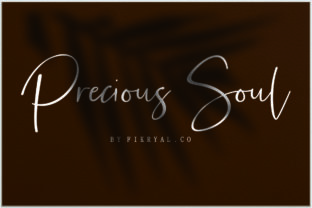
When you're designing a wedding invitation, launching a small-batch skincare brand, or crafting a heartfelt newsletter for your community group, the right font does more than look pretty—it signals intention. Precious Soul is a beautiful handwritten font with a contemporary feel, carefully designed to add a touch of authenticity to any design. It’s not just decorative; it’s purpose-built for creators who want their work to feel human, intentional, and emotionally resonant.
Many designers—especially those working independently or managing multiple roles—struggle with fonts that fall into one of two traps: overly rigid typefaces that lack personality, or overly ornate scripts that sacrifice readability and versatility. You might have experienced this firsthand—spending hours searching for a font that feels personal but still works across digital and print formats, or choosing something “safe” only to realize later it reads as generic or disconnected from your message. These aren’t just aesthetic concerns—they impact engagement, trust, and how your audience perceives your values.
Precious Soul bridges that gap. Its letterforms balance natural variation (subtle shifts in stroke weight, gentle irregularities in baseline alignment) with clean, modern proportions. Unlike calligraphic fonts that demand tight spacing or formal contexts, Precious Soul holds up beautifully at smaller sizes—on product tags, social media thumbnails, or email headers—without losing its warmth. It’s legible, expressive, and grounded—not flashy, but memorable.
Consider a few real-world scenarios where Precious Soul makes a measurable difference:
- A local bakery launching seasonal packaging: Instead of relying on stock script fonts that all look alike, the owner uses Precious Soul for flavor names and short origin stories (“Made with lavender from our neighbor’s garden”). The result? Customers report feeling “invited in”—not sold to.
- A therapist creating client handouts: Clinical materials often default to sterile sans-serifs. Switching key headings and affirmations to Precious Soul softens tone without sacrificing clarity—supporting emotional safety and approachability.
- An educator designing printable classroom resources: Students respond more positively to worksheets and welcome letters when text feels personally crafted. Precious Soul adds that subtle “handmade” cue—ideal for growth-mindset posters or parent communication templates.
What sets Precious Soul apart isn’t just its appearance—it’s how thoughtfully it’s engineered for use. It includes full Latin character support, standard ligatures for smoother word flow (like “fi” and “fl”), and OpenType features that allow for optional stylistic alternates. You don’t need advanced typography knowledge to benefit: even basic use—pairing it with a clean, neutral sans-serif like Inter or Lato for body text—creates immediate visual hierarchy and emotional contrast.
That said, effective implementation depends on your goals and context. A wedding planner may use Precious Soul exclusively for names and dates, keeping other text functional and crisp. A lifestyle blogger, on the other hand, might apply it selectively—to pull quotes in Instagram carousels or signature section headers—so it retains impact without overwhelming readers. The key is restraint: Precious Soul shines brightest when it carries meaning, not decoration.
It’s also worth noting how different users approach font selection—and why Precious Soul fits diverse workflows:
- Non-designers (entrepreneurs, educators, nonprofit staff): You value simplicity and speed. With Precious Soul, you get professional polish without needing a designer on retainer. Install it once, and use it confidently in Canva, Google Docs (via upload), or Adobe Express.
- Freelance designers: You juggle brand consistency, client expectations, and tight timelines. Precious Soul serves as a reliable “human touch” anchor—easily adaptable across logos, social assets, and presentation decks while maintaining cohesion.
- In-house marketing teams: You need fonts that scale across departments and platforms. Because Precious Soul renders well on screens and in print—and supports accessibility best practices when used appropriately (e.g., sufficient contrast, appropriate sizing)—it reduces revision rounds and ensures brand voice stays consistent.
Practical outcomes follow naturally. Teams using Precious Soul in customer-facing materials often see improved open rates on email campaigns, higher engagement on visually led social posts, and stronger emotional resonance in feedback surveys. One small-business owner reported that after switching her website’s hero headline to Precious Soul, time-on-page increased by 22%—not because the font changed functionality, but because it invited slower, more attentive reading.
Still, thoughtful usage matters. Avoid pairing Precious Soul with other highly decorative fonts—its strength lies in contrast, not competition. Steer clear of ultra-thin weights for body copy or low-resolution displays. And while it’s versatile, it’s not meant for data tables, legal disclaimers, or dense instructional text. Reserve it for moments where humanity matters most: greetings, invitations, affirmations, signatures, and storytelling.
If you’re evaluating whether Precious Soul is right for your next project, ask yourself: Where do I want people to pause? Where do I want them to feel seen? Those are the places Precious Soul belongs—not as background, but as quiet intention made visible.
Ultimately, typography is never neutral. Every font choice communicates something—about your standards, your empathy, your attention to detail. Precious Soul doesn’t shout. It leans in. It listens. And in a world saturated with algorithm-driven content and templated visuals, that kind of authenticity isn’t just refreshing—it’s essential.