Condita: The Handwritten Font That Brings Romantic Lightness to Modern Design
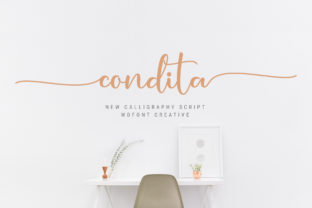
There’s a quiet magic in fonts that feel like they were written—not coded. Condita is one of those rare typefaces that lands softly on the page, yet leaves a lasting impression. It’s not loud or commanding. It doesn’t shout for attention. Instead, Condita invites—gently, warmly, with unmistakable charm. As a light and fresh handwritten font, it carries an incredibly romantic feel, making it a standout choice for designers who want authenticity without sacrificing elegance.
What Makes Condita Feel So Effortlessly Romantic?
Romance in typography isn’t about flourishes alone—it’s about rhythm, spacing, warmth, and human imperfection. Condita captures all three. Its letterforms breathe with subtle variation: slight shifts in stroke weight, delicate entry and exit strokes, and gentle curvature that mimics natural pen movement. Unlike rigid script fonts that feel overly practiced, Condita embraces graceful inconsistency—just enough to suggest a real hand at work.
The lightness of Condita is intentional and functional. Its low visual density makes it highly legible at medium sizes, especially against soft or textured backgrounds. That airiness also gives it versatility: it works as beautifully on a minimalist wedding invitation as it does in a boutique skincare brand’s Instagram story. And because it avoids heavy contrast or dramatic swashes, Condita never feels dated—it feels timeless, like a love note tucked into a book decades ago.
Where Condita Fits Naturally in Today’s Creative Workflows
Designers aren’t just choosing fonts—they’re choosing emotional tone, brand voice, and user experience. Condita fits seamlessly into workflows where warmth and approachability matter most.
- Wedding & Event Design: From save-the-dates to ceremony programs, Condita adds sincerity without saccharine sweetness. Its lightness keeps layouts airy and uncluttered—even when paired with delicate botanical illustrations or linen-textured paper.
- Lifestyle & Wellness Brands: Yoga studios, herbal tea labels, candle makers—these businesses thrive on calm, intention, and care. Condita mirrors that ethos. Try it for product names (“Lavender Moon Mist”) or short taglines (“Breathe deeply. Begin again.”).
- Digital Storytelling: In email newsletters, landing pages, or micro-animations, Condita lends personality without slowing load times. Its clean vector outlines render crisply on screens, and its OpenType features (like contextual alternates) add subtle nuance when enabled.
- Editorial Touches: Use Condita sparingly but meaningfully—pull quotes in long-form blog posts, chapter headings in digital zines, or captions under personal photography. It signals intimacy, not decoration.
Practical Considerations Before You Choose Condita
Like any thoughtful design decision, using Condita well means understanding its strengths—and its boundaries.
First, consider scale. Condita shines at sizes from 18px to 72px—but shrinks poorly below 14px. Its fine details blur at small sizes, so avoid body text or dense UI labels. Instead, pair it with a clean, neutral sans-serif (think Inter, Lato, or even a soft geometric like Poppins) for balance. That contrast—handwritten warmth against structured clarity—creates visual harmony and improves readability.
Second, think about contextual tone. While Condita is romantic, it’s not inherently “vintage” or “feminine” in a narrow sense. Its lightness and modern proportions make it equally at home in gender-neutral branding or contemporary art direction. What matters is consistency: if your brand voice is poetic and unhurried, Condita reinforces that. If your messaging is fast-paced, data-driven, or highly technical, Condita may soften your message more than intended.
Third, check licensing. Condita is available through reputable foundries and font marketplaces, often with clear web, desktop, and app usage terms. For client work, always confirm whether the license covers commercial redistribution (e.g., in a Shopify theme or SaaS dashboard). Some versions include bonus ligatures or stylistic sets—worth exploring if you’re crafting custom wordmarks or monograms.
Real-World Pairings That Elevate Condita
Typography pairing isn’t science—it’s conversation. Here’s how Condita talks well with others:
- With Inter (Variable): A crisp, highly readable sans-serif that adapts beautifully across devices. Use Inter for navigation and body copy; let Condita handle headlines, testimonials, or call-to-action buttons. The contrast feels intentional, not accidental.
- With Cormorant Garamond: For editorial projects leaning into literary elegance, this serif adds gravitas without competing. Condita becomes the voice of the author; Cormorant grounds the layout with tradition and structure.
- With a Soft Mono (e.g., Space Grotesk Light): Unexpected but effective—especially in creative tech or indie publishing. The monospace adds quiet confidence; Condita brings humanity. Great for “behind the scenes” content or developer-facing brand moments that still value soul.
Why Designers Are Choosing Condita Over Trendier Alternatives
In an era flooded with ultra-thin scripts, bouncy brush fonts, and AI-generated “handwritten” styles, Condita stands out by refusing to overperform. It doesn’t rely on exaggerated loops or forced irregularity to signal “authenticity.” Instead, it trusts subtlety—and that trust pays off.
Consider the fatigue factor. Many trendy handwritten fonts wear thin after repeated use—on social feeds, in ads, across landing pages. Their energy feels borrowed, not earned. Condita avoids that trap. Its lightness isn’t fragile; it’s resilient. It holds up across seasons, campaigns, and platforms without demanding attention—it earns it instead.
Also worth noting: Condita scales gracefully across mediums. Print? Crisp on uncoated stock. Web? Lightweight file size, excellent hinting. Motion? Smooth interpolation in After Effects or Figma auto-animate. That cross-platform reliability reduces revision rounds and speeds up approvals—especially valuable for freelancers managing tight timelines or agencies juggling multiple stakeholders.
Getting Started With Condita—Without Overthinking It
You don’t need a full brand overhaul to begin working with Condita. Start small:
- Add it to your next mood board—not as the hero, but as the whisper beneath imagery.
- Use it for a single line of text in a Canva social post: a quote, a date, a location. Notice how it changes the emotional temperature.
- Test it in Figma or Adobe XD alongside your current font stack. Does it clarify or complicate? Does it slow down reading—or invite pause?
- Try writing a short brand statement in Condita, then read it aloud. Does it sound like something you’d say to a friend? If yes, you’re likely in alignment.
Remember: fonts are tools, not talismans. Condita won’t fix weak copy or unclear strategy. But when your message is already heartfelt, intentional, or quietly powerful—Condita helps it land exactly as meant to be felt.
Final Thought: Lightness as Intention, Not Absence
In design—and in life—we often mistake lightness for lack of substance. Condita proves otherwise. Its freshness comes from precision, not neglect. Its romance stems from restraint, not excess. It’s light because it chooses what to carry—and what to release.
That makes Condita more than a font. It’s a reminder: the most memorable designs don’t fill every inch. They leave room—for breath, for feeling, for the quiet hum of connection. And when you choose Condita, you’re not just selecting a typeface. You’re choosing space. You’re choosing warmth. You’re choosing to say something meaningful—lightly.