Beatrice Line: A Handwritten Font That Fits Real Design Workflows
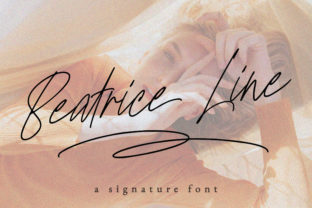
Beatrice Line is a distinctive handwritten font designed with natural rhythm and intentional flow. Unlike many script fonts that prioritize ornamentation over usability, Beatrice Line balances authenticity with functionality — its strokes mimic the relaxed confidence of a practiced signature, yet it remains legible, scalable, and consistent across applications. It’s not just decorative; it’s a tool built for integration into real-world creative and business processes.
Where Beatrice Line Fits in Your Creative or Business Workflow
Fonts are rarely chosen in isolation — they’re selected as part of a broader decision chain: defining brand voice, finalizing packaging layouts, preparing client deliverables, or launching a content campaign. Beatrice Line enters that chain at multiple points — not as an afterthought, but as a deliberate asset that supports clarity, cohesion, and human-centered communication.
Before a project begins, designers and small business owners often audit their visual assets to ensure alignment with tone and audience. Beatrice Line serves well in this planning phase: its warmth and approachability make it a strong candidate for brands prioritizing trust, craftsmanship, or personal connection — think artisanal food labels, wellness coaching materials, or boutique education platforms. Its presence in early mood boards or style guides signals intentionality, not trend-chasing.
During execution, Beatrice Line functions efficiently across tools. It’s compatible with Adobe Creative Cloud (Illustrator, Photoshop, InDesign), Figma, Canva, and Google Fonts (when self-hosted). No complex setup is required — install once, then apply where emphasis matters most: a headline on a landing page, a hand-signed note in an email sequence, or the primary wordmark in a logo lockup. Because its letterforms avoid extreme contrast or tight spacing, it renders cleanly at small sizes on packaging and remains readable on mobile blog headers.
Practical Use Cases — Not Just “Nice to Have”
Beatrice Line excels where personality and precision intersect. Here’s how it works in context:
- Logos & Brand Identity: Paired with a clean sans-serif for body text, Beatrice Line provides immediate differentiation. It avoids looking generic while still conveying professionalism — ideal for service-based businesses like freelance editors, therapists, or independent educators who want to signal empathy without sacrificing credibility.
- Packaging & Labels: On product packaging — especially for handmade, organic, or locally sourced goods — Beatrice Line adds tactile authenticity. Its subtle variation in stroke weight mimics ink-on-paper texture, reinforcing craft and care. Test it at 14–18pt on jar labels or hang tags: it holds detail without requiring magnification.
- Digital Content: Blog headlines, email subject lines, and social media quote graphics benefit from its visual pause. Unlike all-caps or heavy display fonts, Beatrice Line invites reading rather than demanding attention. Use it sparingly — one line per layout — to preserve impact and avoid fatigue.
- Signatures & Personal Touches: Whether embedding a custom signature into PDF proposals or generating personalized thank-you notes via automation tools (like Mailchimp or Notion automations), Beatrice Line delivers consistency without looking robotic. Its natural entry and exit strokes eliminate the “cut-and-paste” feel common with static PNG signatures.
Integration Without Friction
Adopting any new font requires checking compatibility, licensing, and workflow fit. Beatrice Line simplifies this:
- Licensing: Available under standard desktop and web licenses, it supports commercial use out of the box — no need to negotiate extended rights for merch, client work, or SaaS dashboards.
- File Formats: Delivered in OTF and WOFF2, it works natively in design software and modern browsers. No fallback font needed for critical headings if served correctly.
- Pairing Strategy: It pairs best with neutral, highly legible typefaces — think Inter, Lato, or Source Sans Pro. Avoid competing scripts or overly decorative serifs; Beatrice Line needs breathing room to shine.
- Consistency Across Outputs: Because its lowercase ‘a’, ‘g’, and ‘y’ follow conventional shapes (not stylized alternates), readers process text faster. This matters when reusing the same font across print brochures, digital ads, and presentation decks — the voice stays unified.
Preparing for Long-Term Use
Beatrice Line isn’t a seasonal trend. Its strength lies in longevity: it doesn’t rely on novelty, but on enduring qualities — rhythm, balance, and restraint. To maximize its lifespan in your toolkit:
- Document usage rules early: Define where Beatrice Line appears (e.g., “Headlines only,” “Never used for body copy”) in your brand guidelines. This prevents inconsistent application as teams grow or projects scale.
- Test before committing: Render sample text at actual sizes and backgrounds — especially on textured paper or low-contrast UIs. Its thin strokes can disappear on busy backgrounds or dark mode interfaces unless adjusted with subtle stroke effects or overlays.
- Keep backups organized: Store the font file with version notes and license confirmation in your shared assets folder. Name it clearly (e.g., “BeatriceLine-Regular_OTF_v2.1”) to avoid confusion with trial versions or outdated downloads.
How Beatrice Line Supports Decision-Making — Not Just Decoration
Choosing a font is a micro-decision with macro implications. Beatrice Line helps clarify intent: if your goal is to humanize a process — onboarding emails, course certificates, or customer support templates — it signals attentiveness. If you’re differentiating a physical product in a crowded retail aisle, its organic flow creates instant recognition without shouting.
It also reduces cognitive load in specific contexts. Readers scan handwritten-style fonts more slowly — which sounds like a drawback, but becomes an advantage when you want them to pause and absorb meaning: a mission statement, a core value, or a call to reflect. That intentional pacing supports learning outcomes for educators and engagement metrics for content creators.
For freelancers and agencies, Beatrice Line streamlines client conversations. When presenting a logo concept, using Beatrice Line in the primary mark communicates “this brand values individuality and warmth” before a single word of rationale is spoken. That shared understanding accelerates feedback cycles and reduces revision rounds.
Realistic Expectations — What Beatrice Line Does (and Doesn’t) Do
It won’t replace system fonts for interface text. It’s not optimized for data tables or multi-line navigation menus. And while it includes standard Latin characters and basic punctuation, extended language support (e.g., Cyrillic or Vietnamese diacritics) may require verification depending on the foundry’s release.
What it does do reliably: elevate tone without sacrificing function, support brand storytelling through typography alone, and integrate smoothly into both analog and digital production pipelines. Its value isn’t in being everywhere — it’s in being *right* where it’s needed.
Whether you’re sketching a label concept on paper, building a Shopify store, drafting a newsletter, or refining a pitch deck, Beatrice Line operates as a quiet enabler — not a distraction. It fits into your existing habits instead of demanding new ones. That kind of practical harmony is rare in typography. And it’s why designers, founders, and creators return to Beatrice Line not just for one project, but for the next, and the one after that.