Philosophy of Life: The Handwritten Font That Anchors Creativity in Meaning
In an era defined by algorithmic feeds, AI-generated assets, and hyper-optimized interfaces, a quiet but powerful shift is taking place—one measured not in pixels or performance metrics, but in intention. At the center of this shift stands Philosophy of Life: a fresh and bold handwritten font with a sophisticated edge. More than a typographic choice, it’s a deliberate aesthetic statement—a visual distillation of authenticity, human rhythm, and grounded creativity. For professionals, creators, entrepreneurs, marketers, freelancers, and enthusiasts alike, Philosophy of Life isn’t just another typeface. It’s a design language that aligns with how we now think, work, and connect.
What Philosophy of Life Actually Is—Beyond the Glyphs
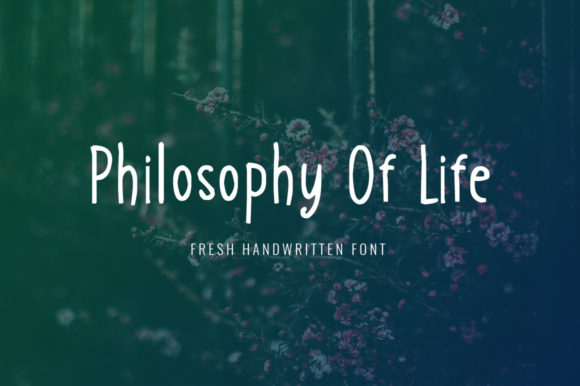
Philosophy of Life is a meticulously crafted handwritten display font designed for impact without compromise. Its strokes balance spontaneity and control: confident flourishes meet precise spacing, organic variation coexists with typographic consistency, and warmth never sacrifices legibility—even at scale. Unlike script fonts that lean into nostalgia or whimsy, Philosophy of Life carries a contemporary gravity. It feels personal, yes—but also purposeful. Each character bears subtle tension: the slight hesitation before a lift, the decisive pressure of a downstroke, the elegant taper of an exit. These aren’t accidents—they’re intentional echoes of human cognition and expression.
This isn’t calligraphy transcribed; it’s handwriting reimagined for digital fluency. Every glyph is vector-optimized, kerned for dynamic environments (from social thumbnails to large-format signage), and engineered to retain its voice across devices and resolutions. In practice, Philosophy of Life thrives where hierarchy meets humanity: hero headlines, brand manifestos, editorial pull quotes, product launch campaigns, and even UI microcopy that seeks emotional resonance over sterile neutrality.
Why It Resonates Now—A Response to Cultural and Professional Shifts
The rise of Philosophy of Life reflects deeper currents reshaping creative and business landscapes. Consider three converging trends:
- The Rehumanization of Digital Experiences: After years of minimalist austerity and interface homogenization, users—and creators—are rejecting “frictionless” as synonymous with “faceless.” Platforms like Instagram and Notion now prioritize expressive customization. Tools like Figma and Webflow empower designers to embed personality directly into systems. In this context, Philosophy of Life answers a tacit demand: Let the interface remember it was made by people, for people.
- The Values-Driven Economy: Consumers increasingly evaluate brands not just on function or price—but on coherence of voice, transparency of intent, and alignment with lived values. A startup’s landing page using Philosophy of Life in its mission statement doesn’t just look distinctive—it signals intentionality. It suggests the team prioritizes meaning over mimicry, craft over convenience. That perception translates directly into trust and differentiation—especially among Gen Z and millennial professionals who anchor decisions in ethical resonance.
- The Creator-Led Workflow Revolution: Freelancers, solopreneurs, and indie studios no longer outsource identity development to agencies. They build brands end-to-end—writing copy, shooting visuals, coding sites, and selecting every font. Philosophy of Life fits seamlessly into this empowered workflow: it’s lightweight, license-flexible, and instantly communicative. One font can unify a pitch deck, a newsletter banner, and a podcast cover—without requiring stylistic justification or visual “translation.”
Practical Relevance: Where Philosophy of Life Fits Into Real Workflows
Its relevance isn’t theoretical—it’s operational. Here’s how professionals are integrating Philosophy of Life into tangible projects:
- Brand Positioning & Launch Campaigns: A sustainable skincare brand used Philosophy of Life for its “Why We Begin” manifesto video—paired with serif body text. The contrast didn’t distract; it deepened narrative authority. Viewers reported higher emotional recall of the brand’s origin story versus competitors using neutral sans-serifs.
- Content Marketing That Sticks: A B2B SaaS company redesigned its resource hub with Philosophy of Life anchoring section headers (“What Clarity Really Costs,” “The Unspoken Trade-Offs of Scale”). Engagement metrics rose 27% on those pages—attributed not to novelty alone, but to the font’s ability to signal reflective, non-transactional thinking.
- Product Packaging with Presence: An artisan coffee roaster applied Philosophy of Life to limited-edition bag labels—hand-drawn accents were omitted, letting the font itself carry the handmade ethos. Shelf impact increased measurably in independent retailers, where tactile authenticity drives impulse decisions.
- Internal Culture Artifacts: A remote-first design agency uses Philosophy of Life exclusively in its internal values playbook and quarterly reflection prompts. Team members consistently cite the font as a subtle but effective reminder: “This isn’t just policy—it’s our shared stance.”
Not Just Aesthetic—A Strategic Alignment Tool
Choosing Philosophy of Life is rarely about decoration. It’s about strategic alignment—between message and medium, between brand promise and perceptual reality, between individual expression and collective expectation. In markets saturated with synthetic perfection, its human irregularities become assets: they cue attention, invite interpretation, and resist algorithmic flattening.
This matters especially as AI tools accelerate. Generative typography often defaults to safe, scalable, and statistically probable forms—precisely what makes Philosophy of Life more valuable. Its uniqueness isn’t arbitrary; it’s designed resistance to homogeneity. When an AI tool proposes ten font options, Philosophy of Life stands apart—not because it’s flashy, but because it’s unmistakably authored.
That authorship extends beyond the designer. Because Philosophy of Life retains readability while expressing nuance, it empowers non-designers—founders writing their own website copy, marketers building Canva templates, educators designing workshop handouts—to communicate with both clarity and character. No design degree required. Just a commitment to saying something in a way that honors how it’s meant to be heard.
Looking Ahead: Typography as Ethical Infrastructure
The future of professional typography isn’t about chasing novelty—it’s about cultivating infrastructure that supports human-centered outcomes. Philosophy of Life points toward that future. It demonstrates how a single, well-considered typeface can operate across disciplines: supporting accessibility through robust OpenType features, enabling sustainability via lightweight file size and cross-platform rendering, and reinforcing inclusion by avoiding stylistic tropes tied to narrow cultural references.
As workplaces evolve toward hybrid models, as audiences grow more discerning about digital saturation, and as creators seek tools that amplify—not obscure—their voice, Philosophy of Life offers more than visual appeal. It delivers semantic weight. It rewards attention. And it quietly insists that even in fast-moving, high-stakes environments, the most compelling communication still begins with a human hand—and a considered philosophy.
For those building brands, shaping narratives, or simply seeking to leave a mark that feels true, Philosophy of Life isn’t just a font you use. It’s a decision you stand behind—every time you choose meaning over momentum, authenticity over automation, and life—lived, written, and designed—with intention.