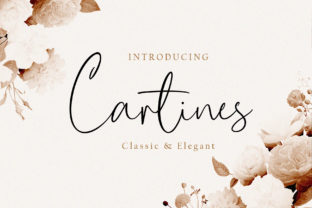
Cartines Font: The Elegant Handwritten Typeface That Elevates Every Creative Project
Imagine a font that feels like a personal note from a cherished friend—graceful, warm, and unmistakably human. That’s the essence of Cartines: a stunning, light, and classically elegant handwritten typeface designed to infuse authenticity and sophistication into any visual communication. Whether you're crafting a wedding invitation, branding a boutique café, designing social media graphics, or refining a presentation slide, Cartines doesn’t just sit on the page—it speaks with quiet confidence and timeless charm.
What Is Cartines—and Why Does It Stand Out?
Cartines is a meticulously crafted handwritten script font, not a digitized scan or an auto-generated brush script. Its letterforms flow with natural rhythm and subtle variation—each lowercase “a,” “g,” and “y” features distinct, organic terminals; ascenders and descenders extend with gentle confidence; and spacing balances airiness with cohesion. Unlike many decorative scripts that sacrifice legibility for flair, Cartines maintains exceptional readability at medium to large sizes—making it both beautiful and functional.
Developed by skilled typographers who understand the nuance of calligraphic motion, Cartines includes OpenType features such as ligatures, alternate characters, and contextual swashes. These aren’t just decorative extras—they’re tools that let designers create dynamic, expressive typography without manual tweaking. For example, typing “The” may automatically render a graceful entrance swash on the “T,” while “love” could connect with a soft, looping exit on the “e.”
The Purpose Behind the Pen: Why Handwritten Fonts Like Cartines Matter Today
In our increasingly digital world—where interfaces are sleek, minimalist, and often impersonal—human-centered design has become more valuable than ever. Handwritten fonts like Cartines serve a powerful psychological role: they signal warmth, approachability, and intentionality. Studies in marketing psychology show that audiences perceive handwritten elements as more trustworthy and emotionally resonant—especially in contexts like hospitality, wellness, education, and artisanal commerce.
Consider these real-world applications:
- Small business branding: A local florist uses Cartines for their logo and packaging labels—evoking care, craftsmanship, and seasonal elegance.
- Educational materials: An online course on creative writing incorporates Cartines for section headers and quote callouts, reinforcing themes of self-expression and authenticity.
- Digital content: A lifestyle blogger pairs Cartines (for headlines) with a clean sans-serif body font—creating visual hierarchy while keeping tone inviting and personal.
- Print collateral: Wedding stationery designers rely on Cartines for save-the-dates and menus, where its delicate weight complements fine paper textures and foil accents.
Dispelling Common Misconceptions About Script Fonts
Many creatives hesitate to use handwritten typefaces—often due to understandable concerns. Let’s clarify three frequent assumptions:
- “Script fonts are hard to read.” While some ultra-decorative scripts blur into abstraction, Cartines was engineered for clarity. Its generous x-height, open counters (the enclosed spaces in letters like “a” and “e”), and consistent stroke contrast ensure strong legibility—even in digital environments with variable screen resolutions.
- “They only work for ‘feminine’ or ‘romantic’ projects.” Cartines’ restrained elegance transcends stereotypes. When used boldly at scale, paired with modern layouts and unexpected color palettes (think charcoal gray on ivory linen or deep navy on matte kraft), it conveys refinement—not frill. Architects, publishers, and even tech startups have successfully adopted it for premium positioning.
- “Using a script font means sacrificing professionalism.” Quite the opposite. Thoughtful typography signals attention to detail and brand maturity. Cartines shines in high-trust contexts—like financial advisories offering personalized wealth planning or medical spas emphasizing compassionate care—because it communicates empathy without compromising authority.
How Cartines Fits Into Modern Creative Workflows
Thanks to widespread support across major design platforms—including Adobe Creative Cloud (Photoshop, Illustrator, InDesign), Figma, Canva Pro, and even web-based tools like Webflow—integrating Cartines is simpler than ever. Designers can access its full character set and OpenType features directly within software panels, while developers can embed it seamlessly via Google Fonts (if licensed for web use) or self-hosted @font-face declarations.
For non-designers—entrepreneurs, educators, content creators—the accessibility of Cartines is equally empowering. Platforms like Canva offer pre-built templates featuring Cartines, allowing users to customize invitations, social posts, or classroom handouts in minutes. No typography training required—just an instinct for what feels right.
Practical Tips for Using Cartines Effectively
To get the most from Cartines—and avoid common pitfalls—keep these best practices in mind:
- Reserve it for emphasis: Use Cartines for headlines, quotes, logos, or short phrases—not long paragraphs. Pair it with a highly legible sans-serif (like Inter, Lato, or Montserrat) or a classic serif (such as Merriweather or Playfair Display) for body text.
- Respect whitespace: Cartines’ light weight thrives with breathing room. Avoid cramming it into tight columns or cluttered layouts. Let its elegance shine through simplicity.
- Test across devices: Preview how Cartines renders on mobile screens, especially in email clients or social feeds. Some older platforms substitute fonts if web embedding isn’t properly configured—always verify fallback behavior.
- License responsibly: Cartines is typically offered under commercial licenses. Whether you’re using it for client work, merchandise, or SaaS interfaces, ensure your license covers your intended use case—including print runs, website traffic volume, or app installations.
Cartines Beyond Aesthetics: A Tool for Meaningful Connection
At its core, Cartines is more than a collection of glyphs—it’s a bridge between creator and audience. In an era saturated with algorithm-driven content and templated visuals, choosing a font like Cartines is a small but deliberate act of humanity. It says: This was made with care. This message matters. You matter.
That resonance extends beyond aesthetics into pedagogy and emotional intelligence. Teachers use Cartines in classroom posters to model cursive fluency and handwriting appreciation. Therapists incorporate it into guided journaling prompts to reduce cognitive load and invite reflection. Even AI-assisted design tools now suggest script fonts like Cartines when users describe goals like “calm,” “authentic,” or “luxury”—proving that human typographic intuition remains irreplaceable.
As digital literacy grows and creative tools democratize design, the value of intentional typography only increases. Cartines reminds us that behind every pixel lies a choice—and every choice shapes perception, memory, and connection.
Final Thoughts: Choose Cartines When You Want to Say More Than Words Alone
If your goal is to stand out—not with noise, but with nuance—Cartines delivers. It’s not flashy. It doesn’t shout. But it lingers. It invites pause. It turns ordinary moments—a thank-you card, a product label, a conference banner—into opportunities for grace.
Whether you're a seasoned designer refining your typographic toolkit or a curious beginner exploring how fonts shape feeling, Cartines offers both beauty and purpose. And in a world hungry for sincerity, that combination is rare—and deeply powerful.
So next time you reach for a font, ask yourself: Does this reflect who I am—or who I want to be? With Cartines, the answer is often beautifully, quietly, yes.