Sambery: The Handmade Calligraphy Font Redefining Authentic Connection in Digital Design
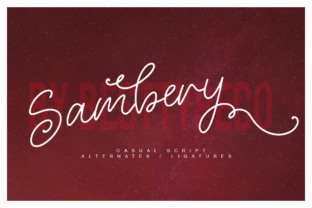
In an era where algorithmic precision dominates digital interfaces—where every pixel is optimized, every interaction measured, and every brand voice filtered through AI-generated tone guides—a quiet but powerful counter-movement is gaining momentum: the return of human intentionality in typography. At the heart of this shift is Sambery, a beautiful and fresh handmade calligraphy font that doesn’t just look hand-drawn—it feels like it carries breath, rhythm, and care.
Sambery isn’t another “script font” added to an overstuffed marketplace. It’s a deliberate response to a growing professional need: the demand for type that conveys warmth without sacrificing clarity, elegance without pretension, and authenticity without cliché. Designed with real pen pressure, natural stroke variation, and organic spacing, Sambery bridges the tactile sincerity of analog craft with the functional rigor required in modern digital workflows.
What Makes Sambery More Than Just Another Script Font?
At its core, Sambery is a meticulously crafted calligraphy typeface born from physical practice—not vector interpolation or stylistic mimicry. Each glyph reflects the subtle inconsistencies of ink on paper: slight tapering at terminals, gentle swelling in curved strokes, and graceful entry/exit flourishes that never feel forced or repetitive. Unlike many “handwritten” fonts that rely on randomized alternates to simulate authenticity, Sambery achieves expressiveness through intentional design logic—every curve calibrated for legibility at scale, every ligature engineered for natural reading flow.
This distinction matters—especially for professionals who rely on typography to shape perception. A marketing director selecting fonts for a rebrand isn’t choosing aesthetics alone; they’re selecting a tonal contract with their audience. Sambery communicates approachability, craftsmanship, and considered attention—qualities increasingly associated with trustworthiness in crowded digital spaces.
Aligning With Evolving Creative and Consumer Expectations
Consumer behavior data consistently reveals a rising preference for brands that signal humanity. According to recent studies by Adobe and McKinsey, 68% of consumers say they’re more likely to engage with content that feels personally crafted—even if delivered digitally. This isn’t nostalgia for analog; it’s a subconscious calibration toward signals of intention. When a business card uses Sambery instead of a generic sans-serif script, it subtly tells recipients: We made time for this. We chose something meaningful.
That resonance extends across use cases. For freelancers building personal brands, Sambery lends distinction to portfolio headers and email signatures—differentiating them from algorithmically polished competitors. For boutique studios designing wedding stationery or artisanal product labels, Sambery provides typographic cohesion without rigid uniformity, allowing each piece to retain individual character. And for SaaS companies launching empathetic customer experiences, Sambery’s soft contrast and open letterforms support accessibility while softening digital friction.
Real-World Applications That Demonstrate Strategic Value
- Greeting cards and invitations: Sambery’s balanced x-height and generous counters ensure readability even at small sizes—critical for RSVP details or fine print—while its fluid rhythm elevates emotional resonance.
- Branding materials: Paired with a clean geometric sans-serif (like Inter or Manrope), Sambery creates sophisticated contrast—ideal for logos, hero banners, or social media banners where brand voice must be both memorable and scalable.
- Business cards and letterhead: Its subtle weight variation adds tactility to printed pieces, reinforcing premium positioning without reliance on expensive finishes or embossing.
- Digital posters and quote graphics: With OpenType features including contextual alternates and swash capitals, Sambery adapts gracefully across platforms—from Instagram carousels to PDF presentations—maintaining visual integrity without manual tweaking.
Why Professionals Are Choosing Sambery Now
The timing isn’t incidental. Several converging trends have elevated Sambery’s relevance:
- The fatigue of over-optimized design: As generative tools flood markets with homogenized visuals, designers are actively seeking assets with irreplicable human nuance. Sambery delivers that distinction out of the box—no post-processing needed.
- Rise of values-led branding: Sustainability, transparency, and craft ethics aren’t just marketing themes—they’re decision criteria. Using a handmade font like Sambery aligns with broader commitments to mindful creation, especially when paired with eco-conscious printing or ethical web hosting.
- Workflow efficiency meets expressive control: Unlike older calligraphy fonts requiring complex glyph substitution setups, Sambery integrates seamlessly into Figma, Adobe Creative Cloud, and modern CSS environments. Its intuitive OpenType implementation means designers spend less time troubleshooting and more time refining message and meaning.
Consider a freelance illustrator launching a new workshop series. Instead of spending hours manually tracing letters in Illustrator—or worse, licensing a generic script with visible repetition—she selects Sambery. In under five minutes, she sets a headline in Figma using the built-in stylistic sets, adjusts tracking for optimal rhythm, and exports crisp assets ready for Canva templates, Mailchimp campaigns, and print-ready PDFs. The result? Cohesive, human-scaled communication—delivered with professional speed.
Technology as Enabler, Not Replacement
It’s worth noting that Sambery thrives not in spite of digital tools—but because of how thoughtfully it integrates with them. Its file structure supports variable font axes (weight, width, and optical size), enabling responsive typographic systems that adapt gracefully across devices. Its hinting is optimized for screen rendering, ensuring that a quote shared via WhatsApp or embedded in a Shopify banner retains its delicate stroke modulation.
This technical sophistication underscores a larger truth: the most forward-looking creative tools don’t erase craft—they extend it. Sambery doesn’t ask designers to abandon efficiency for beauty, or scalability for soul. It asks only that we reconsider what “professional-grade” typography can include: not just precision, but presence; not just function, but feeling.
Designing With Intention, Not Just Impact
For entrepreneurs launching direct-to-consumer brands, Sambery offers more than aesthetic polish—it supports narrative consistency. A skincare line emphasizing botanical integrity might pair Sambery’s gentle curves with earth-toned photography and uncoated paper stock, creating a unified sensory language. A tech consultancy specializing in human-centered AI could use Sambery in presentation decks to soften complex concepts—making data storytelling feel collaborative rather than transactional.
These choices reflect deeper shifts in professional expectations. Clients no longer hire designers solely for visual execution; they seek strategic partners who understand how typographic voice contributes to credibility, memorability, and emotional resonance. Sambery empowers those partnerships—not as a decorative flourish, but as a foundational element of brand architecture.
Looking Ahead: Typography as Cultural Signal
As AI-generated content floods feeds and synthetic voices become indistinguishable from human ones, the value of unmistakably human artifacts rises—not as novelty, but as necessity. Sambery participates in this recalibration not by rejecting technology, but by insisting on its thoughtful application. It reminds us that the most effective communication doesn’t shout—it invites. It doesn’t optimize for speed alone—it honors attention.
That’s why Sambery resonates across disciplines: from marketers building long-term loyalty to educators designing inclusive learning materials, from founders articulating mission-driven visions to developers embedding expressive UI elements. It meets professionals where they are—juggling deadlines, platform constraints, and stakeholder expectations—and gives them a tool that does more than display text. It conveys care.
In a landscape saturated with sameness, Sambery stands apart—not because it’s ornate or obscure, but because it’s human-made, human-tested, and human-relevant. It doesn’t chase trends; it responds to enduring needs: clarity with kindness, distinction with dignity, and beauty with purpose.
Whether you're refreshing a decade-old brand identity or crafting your first client proposal, choosing Sambery is more than a typographic decision. It’s a commitment—to authenticity over automation, to craft over convenience, and to connection over conversion. And in today’s professional climate, that kind of intentionality isn’t just refreshing. It’s essential.