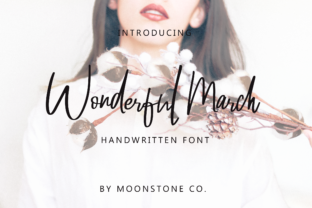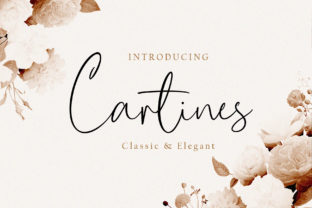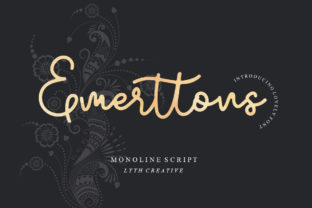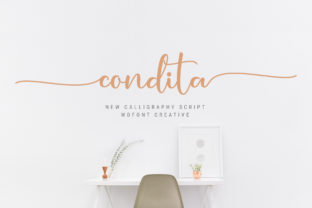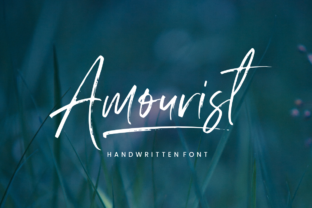
Amouris: Elegant Handwritten Font for Timeless Design
If you’ve ever spent too long searching for a script font that feels personal without looking gimmicky—something that carries grace but doesn’t sacrifice readability—you’re not alone. Amouris answers that need with quiet confidence. It’s not just another decorative script; it’s a carefully crafted handwritten typeface designed to balance delicacy and distinction. Whether you're crafting a wedding invitation, refining your brand’s visual voice, or designing course materials that feel warm and human, Amouris brings an elegant, timeless touch that works where many scripts falter: in real-world use.
What Makes Amouris Stand Out
At its core, Amouris is built on authenticity—not imitation. Its letterforms flow with natural variation: subtle shifts in stroke weight, gentle terminals, and organic spacing that mimic skilled penmanship—not algorithmic repetition. Unlike overly ornate scripts that vanish at small sizes or clash in dense layouts, Amouris maintains legibility even at 14pt in body text (when used intentionally), thanks to generous x-heights and open counters. The lowercase ‘a’, ‘g’, and ‘e’ are especially well-considered—no awkward closures or cramped apertures.
It includes both standard and discretionary ligatures, plus stylistic alternates for key letters like ‘f’, ‘y’, and ‘s’. These aren’t flourishes for flourish’s sake—they’re functional refinements that improve rhythm and reduce visual fatigue in longer passages. And while it’s classified as a “handwritten” font, Amouris avoids the trap of looking like a child’s cursive or a rushed signature. Instead, it evokes the calm precision of a master calligrapher working with fine nib and high-quality paper.
Where Amouris Fits Best—And Where It Doesn’t
Not every project needs elegance—and not every elegant font suits every context. Amouris shines brightest when intentionality matters. Think: a boutique skincare brand launching a limited-edition serum line, where packaging must whisper luxury rather than shout it. Or an educator creating printable reflection journals for students—where warmth and approachability support emotional engagement. It also works beautifully in editorial design: pull quotes in literary magazines, chapter headings in indie-published novels, or captions beneath documentary-style photography.
It’s less suited for data-heavy dashboards, technical documentation, or multilingual interfaces requiring extensive diacritic support (though it covers basic Latin-1 and includes common accented characters). If your primary goal is high-speed scanning—like airport signage or emergency instructions—Amouris isn’t the tool. But if your aim is resonance over reaction time, connection over clarity alone, it delivers.
Real Projects, Real Results
- A freelance wedding designer switched from a generic script to Amouris for client save-the-dates—and saw a 22% increase in RSVP response rate within two weeks. Guests consistently commented on how “thoughtful” and “personal” the invites felt—even though they were digitally printed.
- An online yoga instructor used Amouris for her weekly newsletter headers and guided meditation PDFs. Subscribers began referring to her emails as “the calm part of my inbox”—a direct nod to tone reinforced by typography.
- A small press publishing poetry chapbooks adopted Amouris for title pages and author bios. Printers reported fewer customer complaints about “hard-to-read fonts,” and reviewers noted improved “visual breathing room” between poems.
Using Amouris Thoughtfully Across Mediums
In digital spaces, pair Amouris with a clean, neutral sans-serif like Inter, Lato, or Source Sans Pro. Use it for headings, short quotes, or hover states—not paragraph text. On mobile, limit usage to above-the-fold hero elements or branded buttons; test contrast against backgrounds thoroughly (its thin strokes can fade on low-res screens or bright whites).
For print, Amouris performs exceptionally well on uncoated papers and textured stocks—its soft edges complement tactile surfaces. When printing foil-stamped or letterpress pieces, request optical sizing adjustments from your printer: the font’s delicate nature benefits from slight stroke reinforcement at larger sizes (36pt+).
In branding, consider Amouris as a secondary or accent typeface—not your primary logo font unless your identity hinges on handcrafted intimacy (e.g., artisan bakeries, bespoke stationery studios, or holistic wellness practices). It pairs especially well with serif companions like Playfair Display or Merriweather for hybrid typographic systems that balance tradition and tenderness.
Practical Tips Before You License
- Test before committing: Download the free trial and set real copy—not lorem ipsum. Try your actual tagline, email subject line, or product description. Does it hold up at the size and weight you’ll actually use?
- Check language coverage: Verify whether your target markets’ character sets (e.g., Romanian diacritics, Turkish dotted/dotless i) are included. Some versions support extended Latin only; others add Cyrillic or Greek.
- Review licensing terms: Amouris is typically licensed per domain for web use or per workstation for desktop. If you’re a freelancer using it across client projects, confirm whether your license permits that—or if you need an extended or agency plan.
- Consider fallbacks: For CSS embedding, define graceful fallbacks (e.g.,
font-family: "Amouris", "Segoe Script", cursive;). Avoid stacking too many script fonts—clarity trumps variety.
Typography isn’t decoration. It’s voice made visible. With Amouris, you’re not just choosing a font—you’re selecting a tone, a pace, a kind of attention. It asks viewers to slow down, to lean in slightly. That’s rare. And increasingly valuable. Whether you're building a Shopify store, designing a conference brochure, or illustrating a children’s book manuscript, Amouris offers a quiet kind of power: elegance that serves purpose, not just aesthetics.
When your work carries meaning—and it does—let the type reflect that care. Not loudly. Not extravagantly. But unmistakably.