Mellodi
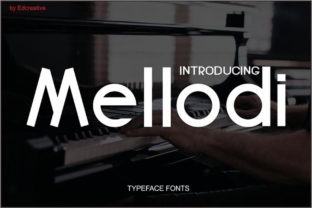
There’s something quietly confident about Mellodi—a classic sans-serif font that feels both familiar and refreshingly intentional. It’s not flashy or experimental, but it carries presence: clean lines, balanced proportions, and a subtle warmth in its lowercase forms. Whether you’re sketching a logo on paper or finalizing a client presentation in Figma, Mellodi steps in with quiet reliability. It’s designed for clarity first—no hidden gimmicks, no forced personality—and that’s exactly why it works so well across real projects.
Where Mellodi Fits Naturally
Mellodi thrives where legibility meets approachability. Think of it as the typeface you reach for when you want your message to land—not shout, not whisper, but connect. It’s especially effective in contexts where tone matters as much as text: a wellness brand launching a new mindfulness app, a local café updating its menu board, or an independent publisher designing a poetry chapbook cover.
Because Mellodi includes both uppercase and lowercase letters with thoughtful spacing and consistent weight distribution, it handles body copy just as gracefully as headlines. You won’t need to switch fonts mid-layout to maintain rhythm—something that saves time and keeps visual consistency intact.
Real People, Real Projects
A freelance graphic designer in Portland recently used Mellodi for a rebrand of a small ceramic studio. She chose it because it softened the sharpness of modern minimalism without slipping into nostalgia. “Clients responded immediately,” she shared. “They said it felt ‘handmade but precise’—like the pottery itself.” That duality is Mellodi’s sweet spot: structured enough for professionalism, warm enough for humanity.
In education, teachers building digital lesson plans have found Mellodi easier to read on tablets and projectors than many condensed or ultra-light sans-serifs. Its open counters (the enclosed spaces inside letters like a, e, and o) improve character recognition at smaller sizes—especially helpful for students with mild visual processing differences or those viewing content on lower-resolution screens.
For solopreneurs launching landing pages or email newsletters, Mellodi offers a polished alternative to overused system fonts like Helvetica or Arial. It doesn’t require licensing for web use in most cases (always verify your source), and its straightforward file structure integrates smoothly with tools like Webflow, Squarespace, and Mailchimp—no custom CSS tweaks needed to get decent line height or letter spacing.
Industries That Benefit Most
- Creative services: Design studios, photographers, and illustrators use Mellodi in portfolios and pitch decks to convey craftsmanship without distraction.
- Wellness & lifestyle: Yoga studios, nutrition coaches, and holistic practitioners choose it for its calm authority—friendly but never frivolous.
- Educational nonprofits: Clear, neutral typography helps keep focus on mission-driven content rather than stylistic flourishes.
- Local retail & hospitality: Cafés, bookshops, and boutique hotels apply Mellodi to signage, receipts, and staff uniforms—it scales well from tiny embroidery to large window decals.
What to Consider Before You Use It
Mellodi isn’t built for every job—and that’s okay. If your project demands high contrast (like bold editorial headlines against dark backgrounds), test how its medium weight holds up before committing. Some users report that at very large sizes—think 80px+ on hero banners—the lowercase letters can feel slightly reserved compared to bolder display fonts. That’s not a flaw; it’s a design choice aligned with Mellodi’s voice.
Also keep in mind: while Mellodi supports standard Latin characters thoroughly, check whether your version includes extended language support (e.g., accented characters for French, Spanish, or Polish) if you’re publishing multilingual content. Not all releases are equal—some free variants may omit diacritics or punctuation variants used in professional typesetting.
If you're pairing Mellodi with another font, lean into contrast without contradiction. Try it with a gentle serif like Playfair Display for headings or a monospace for code snippets—its even rhythm gives other typefaces room to breathe. Avoid stacking it with similarly neutral sans-serifs (like Lato or Open Sans); the distinction blurs, and intention gets lost.
Strengths You’ll Notice Right Away
First, Mellodi’s lowercase letters have a relaxed vertical rhythm—they don’t feel cramped or tense. That makes long-form reading smoother, especially on screens. Second, its uppercase forms retain character without aggression: capitals stand tall but never dominate. Third, spacing between letters feels intuitive—not too tight, not too loose—so you spend less time adjusting tracking manually.
And because it’s a classic sans-serif, Mellodi adapts effortlessly to different mediums. Print? Crisp on business cards and brochures. Web? Renders cleanly across Chrome, Safari, and Firefox—even on older Android devices. Embroidery or laser engraving? Its sturdy letterforms translate reliably to physical substrates without thin strokes collapsing.
When Another Font Might Be Better
If your project hinges on extreme versatility—say, a global SaaS dashboard needing 12 weights, multiple widths, and extensive language coverage—Mellodi may feel limited. Similarly, if you're aiming for playful energy (think kids’ apps or festival branding), its grounded nature might underdeliver. There’s no shame in choosing differently; Mellodi shines brightest when its restraint serves the purpose—not when it’s asked to do everything.
Getting Started Thoughtfully
You don’t need special software to begin exploring Mellodi. Many design platforms include it in their default font libraries—or you can download lightweight web-optimized versions directly from reputable foundries. Just remember: always confirm licensing terms. Some free downloads are for personal use only; commercial projects often require a one-time license or subscription.
Before applying it broadly, try a simple test: set three short paragraphs—one in Mellodi, one in your current go-to font, and one in a serif. Read them aloud. Which one feels easiest to absorb? Which one matches the tone you’re trying to evoke? That kind of tactile, human feedback matters more than any spec sheet.
Finally, trust your eye over trends. Mellodi won’t win awards for novelty—but it earns trust through consistency, clarity, and care. And in a world full of visual noise, that kind of quiet strength is rare, valuable, and deeply usable.