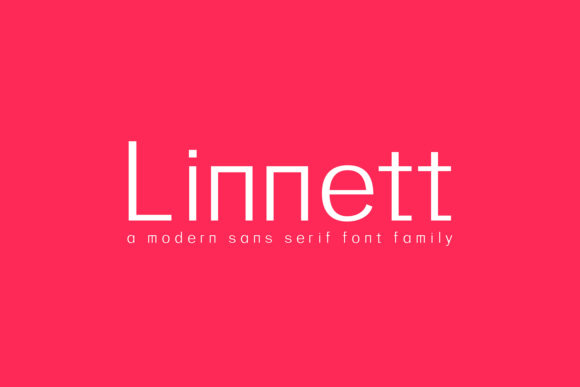
Linnett Family: A Strategic Choice for Purpose-Driven Design
Linnett Family isn’t just another font release—it’s a deliberate tool for designers, brands, and communicators who understand that typography shapes perception before a single word is read. An elegant yet modern font family, Linnett balances refined serifs with subtle geometric warmth, lending itself equally to editorial clarity and brand distinction. Its strength lies not in novelty, but in intentionality: each weight and width has been calibrated for legibility at scale, consistency across media, and quiet authority in context.
Why Linnett Family Fits Real-World Goals—Not Just Aesthetic Preferences
When you choose a typeface, you’re making a strategic commitment—not just to visual style, but to how your audience processes information, interprets tone, and remembers your message. Linnett Family supports this by offering a narrow but purposeful range of weights (Light to Bold) and two widths (Regular and Condensed), avoiding the bloat of oversized families that dilute decision-making. That restraint is intentional: it reduces cognitive load during implementation and encourages disciplined typographic hierarchy.
For entrepreneurs launching a service-based business, Linnett Regular conveys competence without coldness—ideal for websites, pitch decks, and client-facing documents where trust must be earned quickly. For educators designing course materials or digital handouts, its generous x-height and open counters improve reading fluency—especially on screens and printed PDFs viewed across devices. Publishers selecting Linnett for long-form web articles or newsletters benefit from its even rhythm and balanced letterfit, which sustain attention without demanding it.
Using Linnett Family With Precision—Not Habit
Adopting Linnett Family without alignment to goals can backfire. A luxury skincare brand might select it for its elegance—but if their audience skews under 30 and engages primarily through fast-scrolling social feeds, Linnett’s serif character may feel less immediate than a carefully tuned sans-serif alternative. The risk isn’t aesthetic failure; it’s misalignment between voice, channel, and audience expectation.
Before deploying Linnett Family, ask three questions:
- What outcome do I need this text to support? (e.g., conversion, comprehension, credibility, calm)
- Where will this type appear—and at what size? (e.g., mobile body text at 16px vs. large-format signage)
- How does it relate to other visual elements—color, imagery, layout spacing?
Linnett shines when those conditions are met thoughtfully. Its Condensed variant, for instance, excels in tight spaces like email subject lines, dashboard labels, or tabbed navigation—where space is constrained but clarity remains non-negotiable. Its Light weight works well for subtle captions or secondary interface text, provided contrast ratios meet WCAG 2.1 AA standards (Linnett’s design supports this at 16px+ on light backgrounds).
Strategic Pairing and Hierarchy: Less Is More
Linnett Family doesn’t require pairing—but when used alone, it rewards careful weight selection. Avoid stacking too many weights (e.g., Light + Regular + SemiBold + Bold) within one layout. Instead, define a strict hierarchy: one weight for headings, one for body, one for supporting elements. This reinforces structure and reduces visual noise—critical for users scanning content on time-poor platforms like LinkedIn or internal dashboards.
If pairing is needed, prioritize contrast in role—not just form. Linnett Regular pairs effectively with a neutral, highly legible sans-serif like Inter or Public Sans for UI labels or data tables. The contrast between Linnett’s gentle serifs and a functional sans creates clear visual separation between narrative and utility—helping users parse meaning faster.
Operational Realities: Licensing, Performance, and Long-Term Flexibility
Linnett Family is available in variable and static formats. For web use, the variable font file (with optical sizing baked in) delivers better performance and more precise control—especially across responsive breakpoints. But variable fonts require testing across older browsers and CMS environments. If your team maintains legacy systems or serves audiences with limited bandwidth, static WOFF2 files may offer more predictable rendering and smaller initial payloads.
Licensing matters beyond legality—it affects scalability. Linnett Family’s licensing model includes web, desktop, and app usage tiers. A freelance designer using it across five client sites needs a multi-site web license; a school district embedding it into a learning management system requires an extended license. Skipping this step leads to compliance risk—and undermines the very professionalism Linnett helps project.
Branding and Consistency: When Linnett Becomes Part of Your Voice
Over time, consistent use of Linnett Family can contribute to brand recognition—not because it’s flashy, but because it’s reliably present in moments that matter: the first email a customer receives, the tone of an onboarding guide, the quiet confidence of a whitepaper footer. That consistency builds familiarity, which lowers friction in decision-making for your audience.
But consistency requires documentation. Include Linnett Family in your brand guidelines with clear usage rules: minimum sizes, acceptable color contrasts, prohibited combinations (e.g., Linnett Bold in all-caps headlines over busy photography), and fallback behavior for unsupported environments. Without this, Linnett becomes decorative rather than strategic—applied when convenient, abandoned when inconvenient.
Learning and Teaching With Linnett Family
Educators and instructional designers increasingly recognize that typography influences cognitive load and retention. Linnett Family’s balanced proportions and moderate stroke contrast support sustained reading—particularly important for online learning modules, academic syllabi, or accessibility-first documentation. Its readability holds up well in both print and screen contexts, reducing the need for format-specific rework.
More subtly, teaching with Linnett Family models typographic intentionality. When students see how weight, spacing, and scale shape emphasis and flow, they begin to view design not as decoration but as structured communication—a skill that transfers directly to writing, presentation, and product thinking.
Avoiding the “Just Because It’s Pretty” Trap
The most common misuse of Linnett Family is treating it as a stylistic shortcut rather than a functional choice. Selecting it solely because it looks “premium” or “designer-approved” ignores context. A food truck’s Instagram story benefits more from bold, high-contrast sans-serif legibility than Linnett’s nuanced serifs. A technical API documentation site prioritizes monospace clarity over typographic charm.
Linnett Family earns its place when it solves a problem: bridging approachability and authority, balancing tradition and modernity, or unifying disparate touchpoints under a coherent visual language. If your goal is speed, urgency, or maximalist energy, Linnett may not serve you—even if it looks beautiful in isolation.
Making the Decision: A Practical Checklist
Before committing to Linnett Family, run through this short assessment:
- Do your primary communication channels favor readability at small sizes or extended reading? (If yes, Linnett’s design strengths apply.)
- Is your brand voice intentionally warm, trustworthy, and grounded—not trendy or disruptive?
- Do you have the capacity to implement it consistently across platforms—or will inconsistent application dilute its impact?
- Have you tested it with real users in your target demographic, especially those using assistive technologies or older devices?
- Does your current typography create ambiguity or fatigue? Linnett isn’t about change for change’s sake—it’s about resolving specific weaknesses.
Linnett Family doesn’t promise transformation. It offers refinement—when chosen with clarity, applied with discipline, and maintained with care. Its elegance is accessible, its modernity unforced, and its utility proven across real projects: from nonprofit annual reports to SaaS onboarding flows, from university course catalogs to boutique packaging systems. What makes it strategic isn’t how it looks in a specimen sheet—it’s how it performs in service of your goals, day after day, user after user.