Displatter: The Handwritten Font That Makes Your Message Stand Out—Without Trying Too Hard
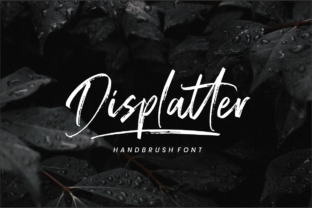
If you’ve ever spent 20 minutes scrolling through font libraries trying to find something that feels personal but polished, bold but not overwhelming, handwritten but still legible—Displatter is likely the one you keep circling back to. It’s not just another script font. Displatter is a true eye-catcher: a unique and bold handwritten typeface with a distinct modern feel. It doesn’t shout—it commands attention with quiet confidence. And because it balances personality with professionalism, it works where most display fonts fail: in real life, across real projects, for real people.
What Displatter Actually Is (and What It Isn’t)
Displatter is a single-weight, high-contrast handwritten font designed for impact—not decoration. Its letters have intentional irregularity: subtle variations in stroke width, slight slant shifts, and organic entry/exit strokes that mimic natural pen movement. But unlike many “hand-drawn” fonts, Displatter avoids excessive flourishes or chaotic looseness. It’s controlled energy—like someone sketching a headline on a whiteboard during a focused brainstorm, not scribbling notes mid-zoom call.
It’s not meant for body text. You won’t use Displatter for your blog’s paragraphs or product descriptions. And it’s not a multipurpose workhorse like Helvetica or Inter. Displatter is a specialist: a go-to when you need to anchor a design with voice, warmth, and intention.
Where Displatter Fits—Naturally—in Everyday Work
Think about the last time you designed something that needed to feel human—not generic. Maybe it was a workshop flyer for your local community center. Or the cover slide for a pitch deck you’re presenting to investors. Or even the banner image for your Instagram Story announcing a new course. In each case, you weren’t just choosing a font—you were choosing tone. Displatter helps you land that tone fast.
For Educators & Trainers
A middle school science teacher uses Displatter for the title of her “Ocean Zones Lab” handout—not the instructions, but the big header at the top. Why? Because it signals curiosity and approachability without dumbing anything down. Students notice it. Parents scanning the weekly newsletter pause longer. It subtly tells them: This isn’t just another worksheet—it’s an invitation.
For Small Business Owners
The owner of a ceramic studio adds Displatter to her website’s “New Workshop Dates” banner. Not the navigation, not the footer—just that one line. It pairs cleanly with a neutral sans-serif for supporting text, creating visual hierarchy that feels intentional, not cluttered. Customers report it “feels like the studio itself”—warm, crafted, quietly confident. That perception translates directly to sign-up rates.
For Freelancers & Creators
A freelance copywriter uses Displatter in her email signature—not for her name, but for the tagline beneath it (“Words that move people”). It’s small, but consistent. Over time, clients begin associating that distinctive rhythm of letterforms with her voice. It becomes part of her brand texture—not flashy, but unmistakable.
When Displatter Works Best (and When to Pause)
Displatter shines brightest in short-form, high-visibility contexts: headlines, logos, social banners, presentation titles, packaging accents, event posters, and branded merchandise like tote bags or enamel pins. Its strength lies in contrast—so it needs breathing room. Pair it with clean, open typefaces (think Montserrat, Lato, or even Georgia) for balance. Avoid stacking it with other decorative fonts or overloading layouts with too much visual noise.
Also consider context carefully. A law firm’s official letterhead? Probably not. But their annual pro bono initiative poster—yes. A fintech dashboard? No. The hero section of their “Financial Wellness Tips” microsite? Absolutely.
And while Displatter supports Latin-based languages well, check glyph coverage if you regularly use accented characters, diacritics, or symbols beyond basic punctuation. Most users won’t need extended language support—but if you run a bilingual bakery or teach ESL, preview the character set before committing.
How It Fits Into Real Creative Workflows
You don’t need design experience to use Displatter effectively. Canva users drop it into templates with zero friction—just swap the default font, adjust tracking slightly (+20–40), and watch the mood shift. Adobe Creative Cloud users appreciate its OpenType features, like contextual alternates that automatically vary letterforms for more natural flow. Even beginners using Google Slides can paste in Displatter via browser extensions or download the webfont version for consistent rendering.
Here’s what users consistently tell us: Displatter saves time on iteration. Instead of cycling through five “almost right” fonts, they land on Displatter early—and spend those extra minutes refining color, spacing, or messaging instead.
Small Details That Add Up
Because Displatter has strong vertical rhythm and generous x-height, it scales well—even at smaller sizes (down to ~36pt for print, ~48px for web). That means it works on business cards *and* billboard mockups. Its ink-trap–inspired spacing prevents crowding in tight lines, so “Limited Spots Available” doesn’t look cramped on a registration button.
It also performs well in dark mode interfaces. Unlike some scripts that vanish against navy or charcoal backgrounds, Displatter’s contrast holds up—especially when paired with light fill colors or subtle drop shadows.
Who Benefits Most—and Why
Entrepreneurs launching a lifestyle brand often choose Displatter for their logo lockup because it conveys authenticity without sacrificing polish. Bloggers use it for featured post headers—it boosts scroll-stopping power without feeling clickbaity. Marketers building lead magnets (e.g., “Download Our Free Brand Voice Guide”) apply it to cover graphics, knowing it makes digital assets feel more like a gift than a download.
Even hobbyists get practical value: someone designing wedding invitations, a friend’s birthday playlist cover, or a framed quote for their home office finds Displatter bridges “I made this myself” and “this looks professionally considered.” That duality is rare—and useful.
A Final Note on Using Displatter Well
Like any strong voice, Displatter works best when it serves the message—not the other way around. Ask yourself: Does this headline need personality? Is this space meant to be noticed first? Will this choice make the viewer feel something before they read a word? If yes, Displatter is likely the right tool. If you’re unsure, try it side-by-side with a neutral option. Often, the difference isn’t “prettier” or “cooler”—it’s clearer intention.
It won’t fix weak copy. It won’t compensate for poor layout. But when paired with thoughtful content and smart design decisions, Displatter adds sophistication—not by shouting, but by showing up exactly as it should: bold, human, and unmistakably present.