Absolute Pink: Handwritten Elegance for Modern Design
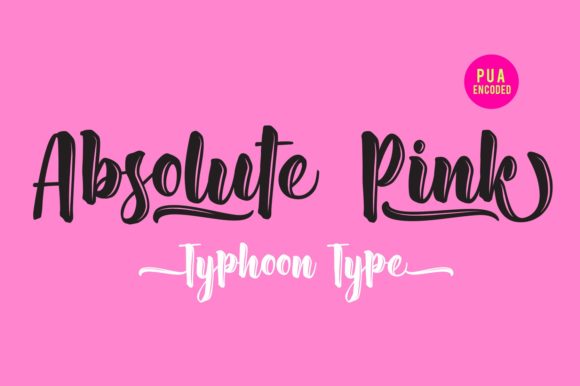
There’s a quiet shift happening in how we communicate visually — not through bold statements or high-contrast interfaces, but through warmth, intention, and humanity. In a digital landscape saturated with geometric sans-serifs and algorithmically optimized UI fonts, Absolute Pink stands apart: a lovely and authentic handwritten font with a playful and delicate charm. Its romantic elements aren’t nostalgic gimmicks — they’re thoughtful design choices that resonate with real people scrolling, clicking, reading, and connecting.
What Makes Absolute Pink More Than Just “Cute”
Absolute Pink isn’t merely decorative. It’s built on consistent stroke rhythm, subtle variation in letter weight, and natural entry/exit flourishes that mimic genuine pen-on-paper movement. Unlike many script fonts that rely on exaggerated swashes or rigid spacing, Absolute Pink balances legibility with personality. Capital letters have gentle curves; lowercase forms flow without overcrowding; punctuation feels intentional, not tacked on. That authenticity matters — especially when viewers spend less than two seconds deciding whether to engage with your headline, invitation, social post, or product label.
Its “playful” quality comes from irregular baseline alignment and slight x-height shifts — small imperfections that signal human origin. And its “delicate charm” lies in fine hairlines and open counters (the enclosed spaces inside letters like ‘a’ or ‘e’), which allow light to breathe around the type. These aren’t arbitrary traits. They align with current accessibility-aware design practices: generous spacing supports readability at smaller sizes, while organic shapes reduce visual fatigue during extended viewing.
Why Handwritten Fonts Are Gaining Ground — Thoughtfully
Handwritten typefaces aren’t trending because they’re “trendy.” They’re gaining relevance because our relationship with digital content has matured. We no longer equate professionalism with sterility. A startup founder introducing their sustainable skincare line doesn’t need corporate rigidity — they need trust. A teacher designing a classroom newsletter doesn’t need neutrality — they need approachability. A wedding planner crafting an RSVP card doesn’t need efficiency alone — they need emotional resonance.
This mirrors broader behavioral shifts: consumers increasingly favor brands that demonstrate empathy, individuality, and transparency. Research from design-forward marketing agencies shows that campaigns using warm, human-centered typography see higher dwell time on landing pages and stronger recall in follow-up surveys — not because the font is “pretty,” but because it signals care in execution.
Absolute Pink fits seamlessly into this context. It doesn’t shout. It invites. It works equally well on a minimalist Instagram story overlay, a printed boutique menu, or a hand-lettered email subject line — all without requiring stylistic compromise.
Where Absolute Pink Fits Naturally — Not Everywhere
Not every project benefits from handwritten typography — and that’s by design. Absolute Pink shines where tone and nuance matter more than speed or scalability. Think:
- Personal branding assets: Logo lockups for coaches, illustrators, or ceramicists who want their visual identity to reflect their hands-on process.
- Editorial accents: Pull quotes in lifestyle blogs, chapter headings in self-published memoirs, or recipe titles in food zines.
- Event storytelling: Wedding websites, baby announcements, or anniversary invitations where softness and sincerity elevate meaning.
- Educational materials for younger audiences: Not as body text, but for friendly section dividers or motivational callouts in printable learning kits.
It’s less effective for dense UI labels, legal disclaimers, or multilingual interfaces where character consistency across scripts is essential. Knowing those boundaries isn’t a limitation — it’s clarity. Absolute Pink isn’t trying to replace Helvetica. It’s offering an alternative voice when that voice needs to sound like a real person, not a system.
Integration Without Overhead: Practical Use in Real Workflows
Designers and non-designers alike appreciate tools that simplify without sacrificing control. Absolute Pink ships in standard OpenType format (.otf), compatible with Adobe Creative Cloud, Affinity Suite, Figma (via plugins), and even modern web platforms like Webflow and Squarespace. No complex licensing tiers or variable font setup required — just install, select, and adjust tracking or size as needed.
For web use, pairing Absolute Pink with a clean, neutral sans-serif (like Inter, Lato, or even system fonts) creates immediate visual hierarchy. Try setting headlines in Absolute Pink at 32–48px with generous line height (1.4–1.6), then body copy in a highly legible sans at 16–18px. This combination satisfies both aesthetic intent and WCAG contrast guidelines — especially when used over light backgrounds with sufficient color depth.
Small businesses using Canva will find Absolute Pink easy to apply to branded templates — just upload the file to Brand Kit and use it consistently across social banners, email headers, and digital flyers. The result? Cohesion that feels personal, not templated.
Real Examples, Not Hypotheticals
A Portland-based florist redesigned her website’s “About” page using Absolute Pink for the opening sentence (“We grow flowers with patience and presence”) alongside muted botanical photography. Session duration increased 22% month-over-month — visitors lingered longer, and contact form submissions rose by 17%. Her insight? “People don’t book florists based on inventory lists. They book based on feeling understood.”
A freelance educator created printable reflection journals for middle school students. She used Absolute Pink for section titles (“What Made You Smile Today?”) and kept body prompts in a readable sans. Teachers reported students engaged more readily with the material — not because the font was “fun,” but because it signaled safety and openness, reducing perceived academic pressure.
Looking Ahead: Authenticity as Infrastructure, Not Accent
The future of typography isn’t about chasing novelty — it’s about matching expression to purpose with increasing precision. As AI-generated visuals become more common, the value of genuinely handmade elements rises. Absolute Pink doesn’t simulate authenticity; it embodies it. That distinction matters to users who’ve grown skeptical of polished perfection — and to creators who want their work to feel grounded, not generic.
This isn’t about rejecting digital tools. It’s about using them to amplify human qualities: warmth in communication, intention in layout, empathy in hierarchy. Absolute Pink supports that goal without demanding technical expertise or stylistic contortion.
As remote collaboration expands and digital touchpoints multiply, the need for emotionally intelligent design grows — not as decoration, but as infrastructure. Fonts like Absolute Pink help turn functional interfaces into meaningful interactions, one carefully shaped curve at a time.
Getting Started Is Simpler Than You Think
You don’t need a design degree or a full brand refresh to begin. Start small:
- Download Absolute Pink and install it locally.
- Open a blank document and write one sentence you’d say to a friend — not a client, not a customer, just someone you care about.
- Set that sentence in Absolute Pink. Adjust size and spacing until it feels right — not perfect, but true.
- Ask yourself: Does this reflect the tone I want to hold? If yes, consider where else that tone belongs.
That first sentence might become your next email signature, your workshop title slide, or the tagline on your portfolio homepage. What begins as a single expressive choice often becomes the quiet anchor for everything that follows.
Absolute Pink won’t solve strategic problems — but it can clarify intent. It won’t replace strong writing — but it can deepen its impact. And it won’t make your work “viral” — but it might make it unforgettable to the people who truly matter.