Wax Font: A Practical Evaluation for Designers and Developers
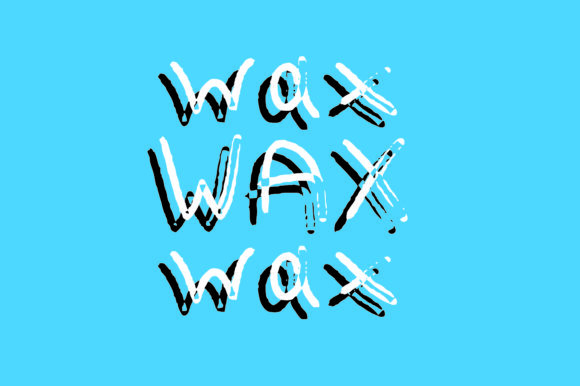
Wax is a casual handwritten typeface designed to evoke spontaneity and approachability. Unlike formal script fonts or tightly kerned sans-serifs, Wax features uneven baseline alignment, variable stroke weight, and subtle irregularities—hallmarks of authentic pen-on-paper writing. It’s not a digitized calligraphy font nor a brush script; instead, it occupies a middle ground where legibility meets personality, making it distinct among contemporary handwritten options.
Why Consider Wax?
Designers and developers often seek typefaces that reinforce tone without sacrificing usability. Wax appeals most when the goal is to signal informality, warmth, or creative experimentation—such as in indie brand identities, editorial sidebars, event invitations, or UI microcopy meant to feel human-centered. Its charm lies in its restraint: it avoids excessive flourishes or exaggerated slant, which helps maintain readability at moderate sizes (16–24px) and in short-form contexts.
People researching Wax typically fall into two groups: those seeking a distinctive voice for a specific project, and those comparing handwritten fonts for long-term use across digital or print systems. In both cases, the decision hinges less on novelty and more on functional fit—how well Wax supports communication goals while aligning with technical and aesthetic constraints.
Key Benefits of Using Wax
- Distinctive yet legible: Its irregular rhythm adds character without collapsing into illegibility, especially in headings or short labels.
- Low visual fatigue in limited use: Because it’s not intended for body text, Wax performs well where attention-grabbing contrast matters—like section dividers or CTA buttons.
- Light file footprint: As a single-weight, standard-encoding font, Wax loads quickly and integrates smoothly into web projects using @font-face or variable font workflows (if a variable version is available).
- Consistent rendering: Unlike some highly decorative scripts, Wax avoids complex OpenType features like contextual alternates or ligatures, reducing cross-browser inconsistencies.
Tradeoffs and Realistic Expectations
Wax is intentionally unrefined—and that’s both its strength and its limitation. It does not scale well for extended reading. At small sizes (below 14px), letterforms begin to blur; at large display sizes (over 48px), its irregularities may appear unintentionally uneven rather than charming. Users should expect to pair Wax with a neutral, highly legible companion font—for example, a geometric sans-serif like Inter or a warm humanist face like Lato—for balanced typographic hierarchy.
Another consideration is language support. Wax covers basic Latin characters (A–Z, a–z, numerals, common punctuation), but lacks extended diacritics, Cyrillic, or Greek glyphs. Projects requiring multilingual content—or even accented characters common in French, Spanish, or German—will need fallback strategies or alternative typefaces.
Also note: Wax is not open source. Licensing varies by vendor (e.g., Google Fonts, Adobe Fonts, independent foundries), and usage rights differ between web, desktop, and app embedding. Always verify license scope before implementation—especially for commercial products or client work where redistribution or font subsetting may be involved.
When Wax Is a Strong Fit
Wax works best in focused, intentional applications—not as a system-wide default. It shines in scenarios where authenticity and lightness are strategic priorities:
- Brand accents: Logos, taglines, or social media avatars for lifestyle brands, creative studios, or educational platforms aiming for friendly authority.
- Interactive elements: Hover states, success messages, or playful notifications in web apps where tone reinforces user experience.
- Print collateral with short copy: Posters, packaging inserts, or zine covers where text volume is low and visual impact is high.
- Prototyping and mood boards: As a design-system placeholder to test voice and hierarchy before committing to production fonts.
In these cases, Wax contributes meaningfully to perception—conveying care, craft, and accessibility—without demanding extensive typographic infrastructure.
When to Explore Alternatives
Wax may not serve well if your project requires:
- Body text or long-form reading: For paragraphs, articles, or documentation, prioritize fonts built for sustained legibility—like Source Serif Pro, Merriweather, or even system fonts (e.g., Georgia, San Francisco).
- High contrast or accessibility compliance: While readable in context, Wax hasn’t been optimized for WCAG contrast ratios or dyslexia-friendly spacing. Pairing it with high-contrast color schemes helps, but it shouldn’t replace tested accessible fonts in critical UI components.
- Strict brand consistency across teams: Handwritten fonts can invite inconsistent interpretation—especially in collaborative environments. If designers, developers, and marketers need clear, repeatable typographic rules, a more structured font family may reduce ambiguity.
- Extensive language or character needs: Projects targeting global audiences benefit from fonts with broad Unicode coverage—like Noto Sans, IBM Plex, or Roboto Flex—rather than narrowly scoped options like Wax.
Making a Practical Decision
Evaluating Wax isn’t about whether it’s “good” in absolute terms—it’s about whether it solves a specific problem you have. Start by asking:
- What role does typography play in this project’s communication goals? If conveying approachability or creative energy is central, Wax warrants testing. If neutrality, speed, or precision is required, it likely isn’t the right tool.
- Where will the font appear—and how much text will it set? Mock up real content: a headline, a button label, a short caption. Does Wax enhance clarity or distract from it? Test on multiple devices and screen sizes.
- What are your technical constraints? Check licensing, loading performance, and fallback behavior. Can you reliably serve Wax without degrading perceived performance or violating usage terms?
- How does it pair with your existing type system? Try Wax alongside your primary body font. Does the contrast feel purposeful—or jarring? Does hierarchy remain clear, or does visual noise increase?
If Wax passes these checks in your context, it can add memorable texture without compromising function. If it creates friction—whether in rendering, licensing, or readability—then alternatives like Quicksand, Architects Daughter, or Playfair Display SC (for a more refined handwritten-adjacent option) may better balance personality and practicality.
Ultimately, choosing a font like Wax is an act of intention—not decoration. When used deliberately, it supports voice and vision. When applied without scrutiny, it risks undermining both. Evaluate it not for what it is, but for what it does in your specific situation.